The Martin B-26 Marauder was the twin-engine medium bomber flown by the 320th Bombardment Group and the 444th Bomb Squadron. This page explains the aircraft behind Bob Cary's mission records.
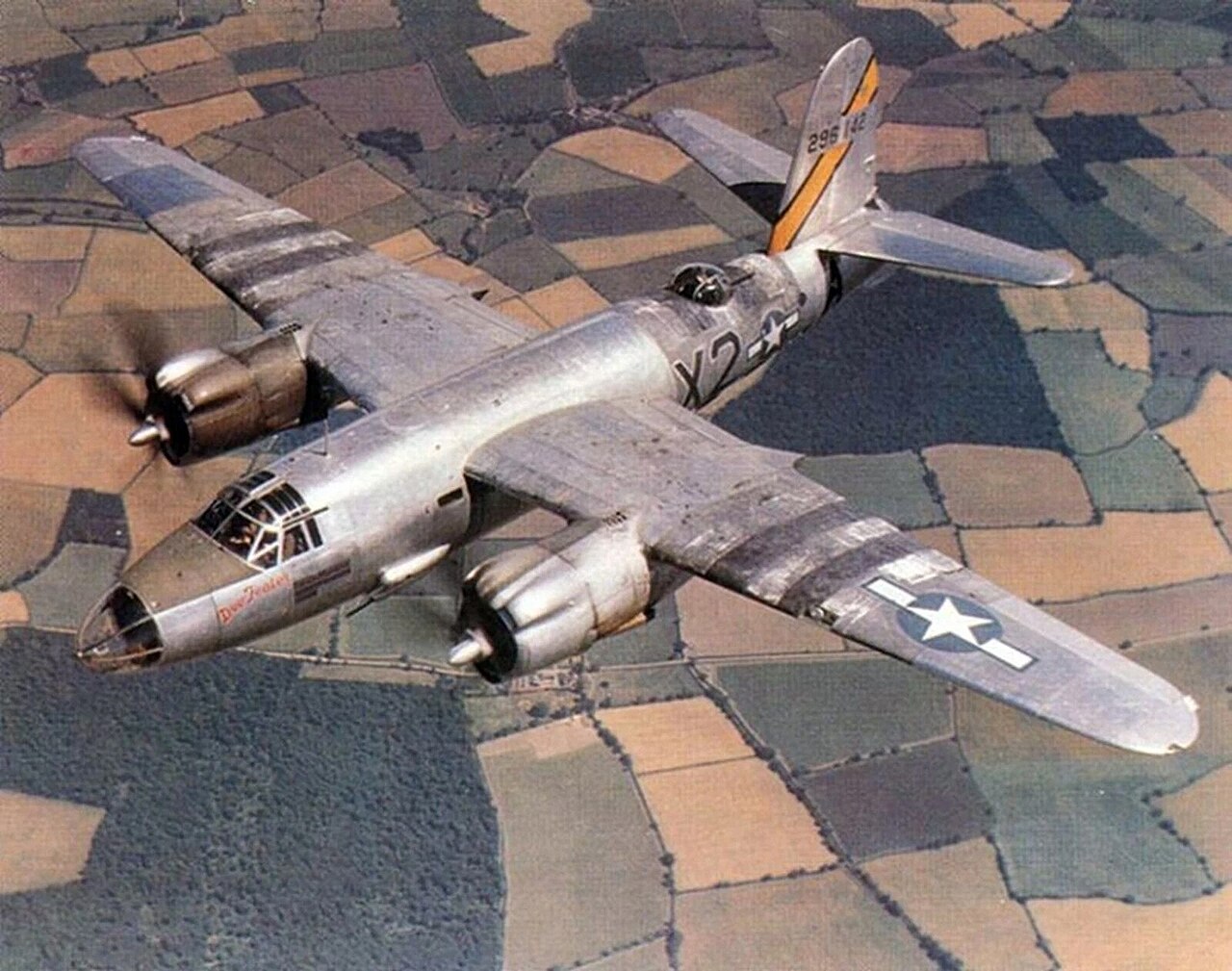
Representative U.S. Army Air Forces B-26B Marauder. This is not documented as Bob Cary's aircraft. Image: Wikimedia Commons / U.S. Air Force public domain source.Research caution
Bob Cary's unit flew B-26 Marauders, and his mission entries list aircraft or ship numbers. Those ship numbers do not automatically prove a serial number, aircraft name, or nose art. The Lady Bugs lead and the Christmas Day ship 82 question still need aircraft-level proof.
Why This Aircraft Matters Here
The B-26 is the physical setting for much of Bob Cary's wartime record: the cockpit he appears in as co-pilot, then pilot; the formation aircraft sent against bridges, rail yards, ammunition sites, defenses, and airfields; and the airplane family remembered in the Lady Bugs story.
The 320th Bombardment Group was a medium bomber group trained on the B-26. It began combat in the Mediterranean in 1943, then moved through North Africa, Sardinia, Corsica, southern France, Dijon, Dole/Tavaux, and finally Germany. By the winter of 1944-1945, when Cary appears in the inspected mission records, the group was using B-26s for the practical work of isolating the battlefield: cutting rail lines, attacking bridges, hitting ammunition dumps, and supporting ground offensives.
Short History
1939-1940
Fast Medium Bomber
The B-26 came from a 1939 Army Air Corps requirement for a fast twin-engine medium bomber. Martin's design promised speed, range, tricycle landing gear, and a useful bomb load. The Air Corps ordered the type in 1940 before the first flight, reflecting both urgency and confidence in the design.
1941-1942
Difficult Reputation
The Marauder was powerful and clean, but it demanded discipline. Early models had high wing loading and relatively high takeoff and landing speeds. In training, that produced a harsh reputation and several grim nicknames. Better training, operating procedures, and later refinements made the aircraft far more effective in experienced hands.
1942-1945
Combat Workhorse
The B-26 began combat in the Southwest Pacific in 1942, but most Marauders later served in Europe and the Mediterranean. Medium-altitude bombing, often around 10,000 to 15,000 feet, made it useful against transportation, supply, airfield, and battlefield targets.
320th context
Bob Cary's World
The 320th used the B-26 across the Mediterranean and European campaigns. Its late-war missions from Dijon and Dole/Tavaux match the pattern in Cary's records: rail bridges, marshalling yards, ammunition dumps, fortified positions, coastal defenses, and airfields.
Technical Description
The B-26 Marauder was an all-metal, twin-engine, medium bomber built by the Glenn L. Martin Company. Its tricycle landing gear, streamlined fuselage, shoulder-mounted wings, and two Pratt & Whitney R-2800 radial engines gave it a faster, more modern profile than many earlier bombers. That speed helped crews survive, but it also meant pilots had to respect approach speeds, engine handling, weight, and formation discipline.
A combat Marauder carried pilot and co-pilot in the cockpit, a bombardier in the glazed nose, and additional crew positions for navigation, radio, and defensive guns. Its defensive armament grew through the war; late examples carried heavy .50-caliber machine-gun coverage in nose, dorsal, waist, and tail positions, plus internal bomb bays capable of carrying a medium bomber load.
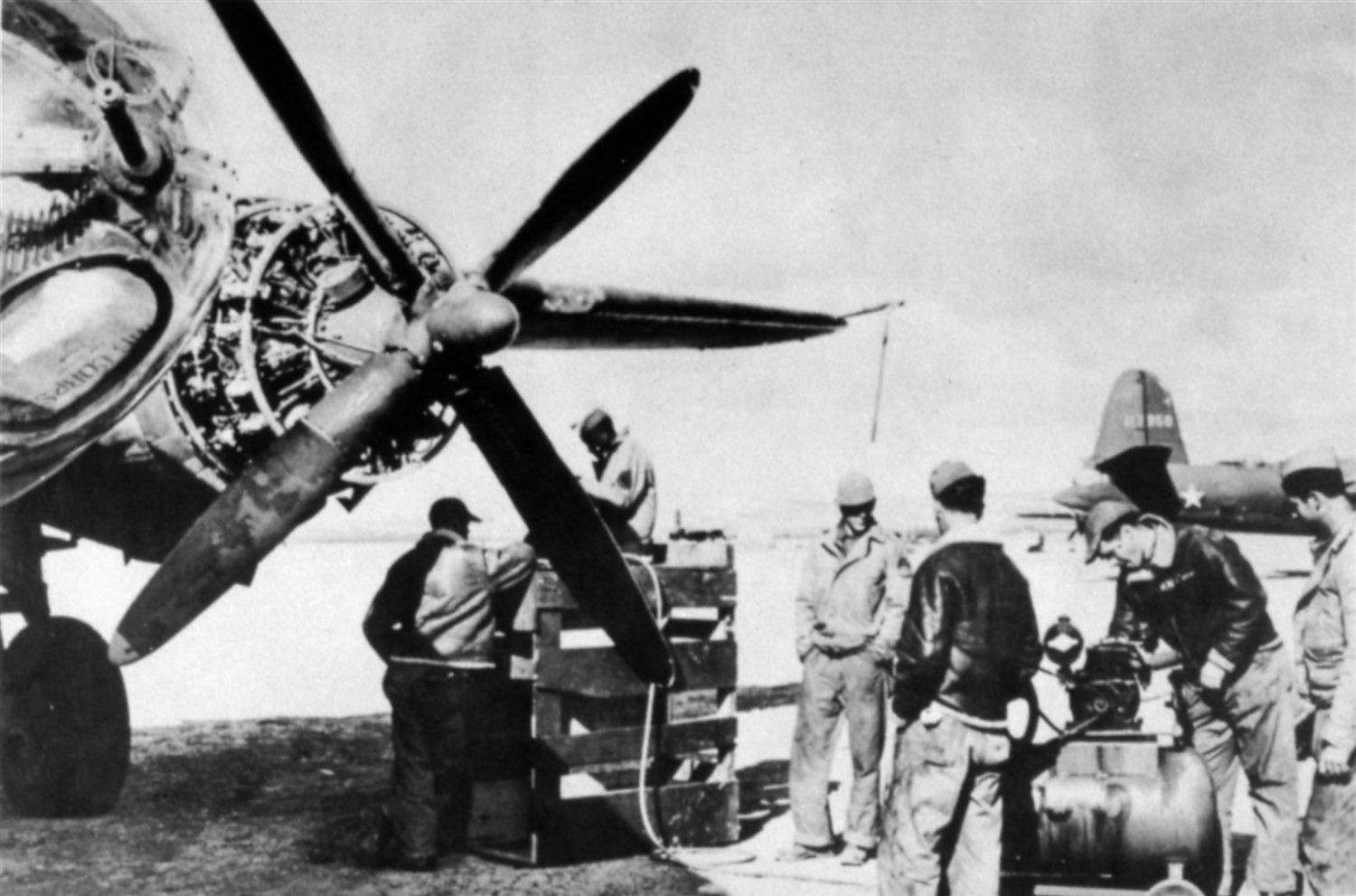
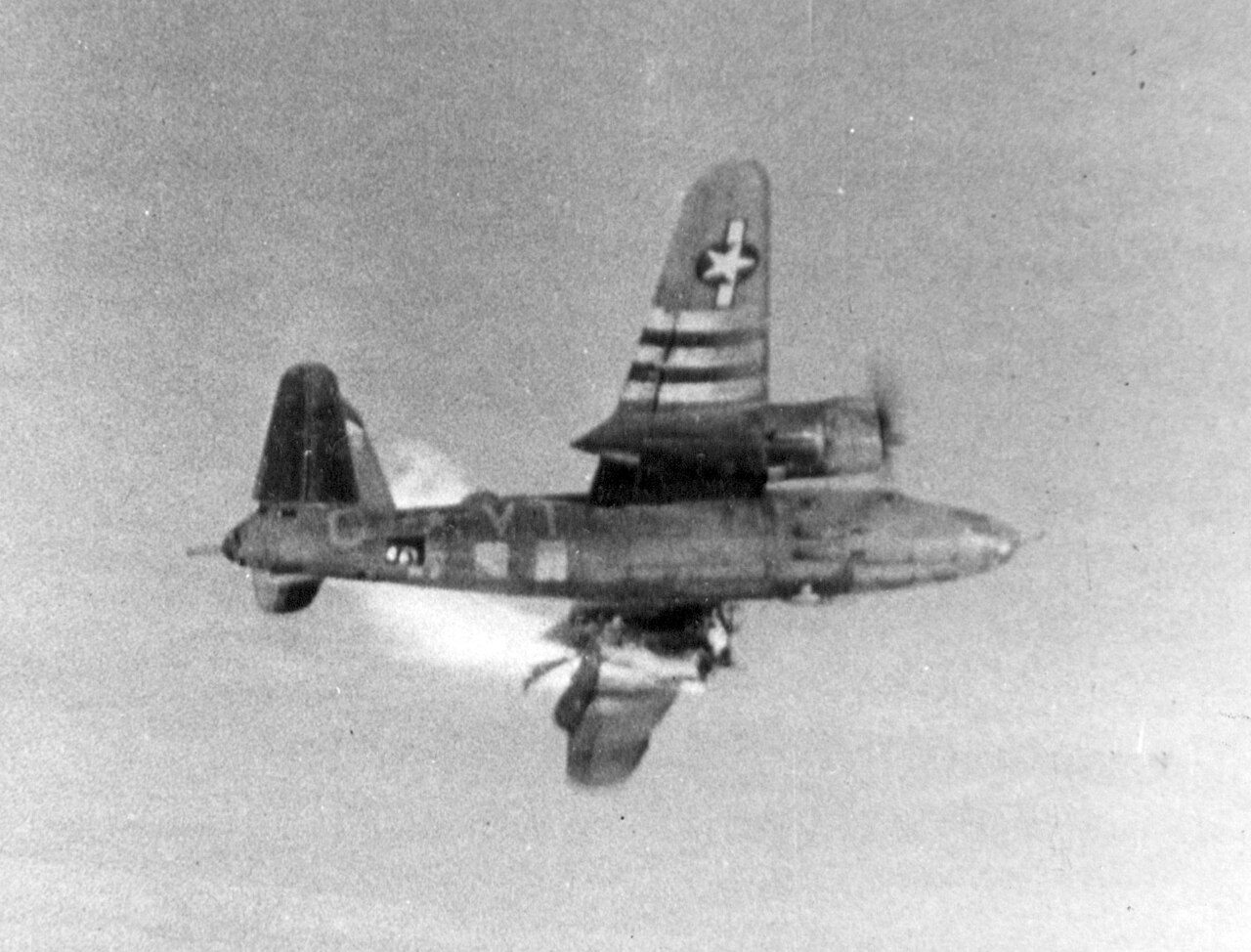
320th Bomb Group personnel servicing a Pratt & Whitney R-2800 engine on a B-26B Marauder in North Africa, 1942-1943. This is aircraft and maintenance context, not a Bob Cary-specific image. Image: Wikimedia Commons / NARA, U.S. federal government public domain source.Combat-risk context: a 323rd Bomb Group B-26 hit by flak over Eller, Germany, on 23 December 1944. This image shows the kind of hazard B-26 crews faced over Germany, but it is not Bob Cary's aircraft or unit. Image: Wikimedia Commons / USAAF, public domain.
Representative Specifications
Figures varied by model and field configuration. These are representative B-26G / late-war Marauder figures from the National Museum of the U.S. Air Force and 320th Bomb Group aircraft summary.
EnginesTwo Pratt & Whitney R-2800 radial engines, about 2,000 hp eachMaximum speedAbout 285 mphCruising speedAbout 190 mphRangeAbout 1,100 milesCeilingAbout 19,800 feetWingspan71 feetLengthAbout 58 feet 6 inches on the B-26GLoaded weightAbout 37,000 poundsArmamentEleven .50-caliber machine guns and up to about 4,000 pounds of bombsCrewCommonly seven in 320th combat summaries
What It Was Built To Do
Bridge and Rail Attacks
Many of Cary's documented missions were aimed at railroad bridges or marshalling yards. The B-26's speed and medium-bomber payload made it useful for repeated interdiction attacks against transport routes feeding the German front.
Ammunition and Supply Targets
Later Cary-linked missions include ammunition dumps and factories. These targets fit the 320th's final-campaign role: deny supplies, disrupt movement, and help Allied ground forces push into Germany.
Formation Discipline
B-26 missions relied on formation flying, target identification, and coordinated bomb runs. The 25 December 1944 Singen/Thayngen mission shows why that mattered: records say part of the formation hit the intended German target and part mistakenly bombed neutral Swiss territory.
Sources for This Page
Aircraft history
National Museum of the U.S. Air Force
Used for B-26 service history, production summary, medium-altitude bombing note, and representative technical specifications.