DoD Services Acquisition Policy
DoDI 5000.74, Adaptive Acquisition Framework material, and services-acquisition guidance grounded the work in the actual pathway, roles, and oversight environment.
Naval Postgraduate School Capstone Applied Project Report
A completed December 2025 NPS capstone project on moving DoD services acquisition from process compliance toward outcome-based visibility, accountability, and mission readiness.
The final report is dated December 2025 and marked Distribution Statement A: Approved for public release; distribution is unlimited. This page presents selected public-release highlights and visual summaries of the finished work.
The study used qualitative policy-document analysis, literature review, and interviews to define a practical architecture for measuring service-acquisition health across enterprise, portfolio, and contract levels.
The project pulled from several research streams instead of treating KPI selection as a dashboard-design exercise. The final framework reflects acquisition policy, oversight findings, academic measurement theory, private-sector service-management practices, existing DoD contract surveillance tools, and interviews with senior DoD and industry stakeholders.
DoDI 5000.74, Adaptive Acquisition Framework material, and services-acquisition guidance grounded the work in the actual pathway, roles, and oversight environment.
External oversight and research helped identify the recurring gap between process visibility and outcome-based assessment of contracted services.
Public-sector performance measurement, balanced scorecard logic, leading and lagging indicators, and structure-process-outcome thinking shaped the framework.
Existing surveillance, assessment, and contract-management artifacts showed where useful data already exists and where governance is needed to make it comparable.
Private-sector service-level agreements, outcome-based contracting, relational contracting, and portfolio reporting informed what could transfer into a DoD setting.
DoD and industry interviews tested whether the framework fit real acquisition work, including metric ownership, data burden, incentives, and decision usefulness.
DoD relies heavily on contracted services, but the Services Pathway lacks a standardized, outcome-based framework for assessing program health. Existing measures often emphasize process compliance, obligation rates, procurement lead time, competition, and administrative activity. Those measures are useful, but they do not consistently answer whether services are improving readiness, quality, cost-effectiveness, customer experience, or mission outcomes.
What outcome-based performance measures should be used to assess the health of services?
The project also examined how standardized metrics can improve DoD assessment and oversight, which private-sector KPIs can transfer to DoD service acquisitions, and what data collection challenges must be mitigated.
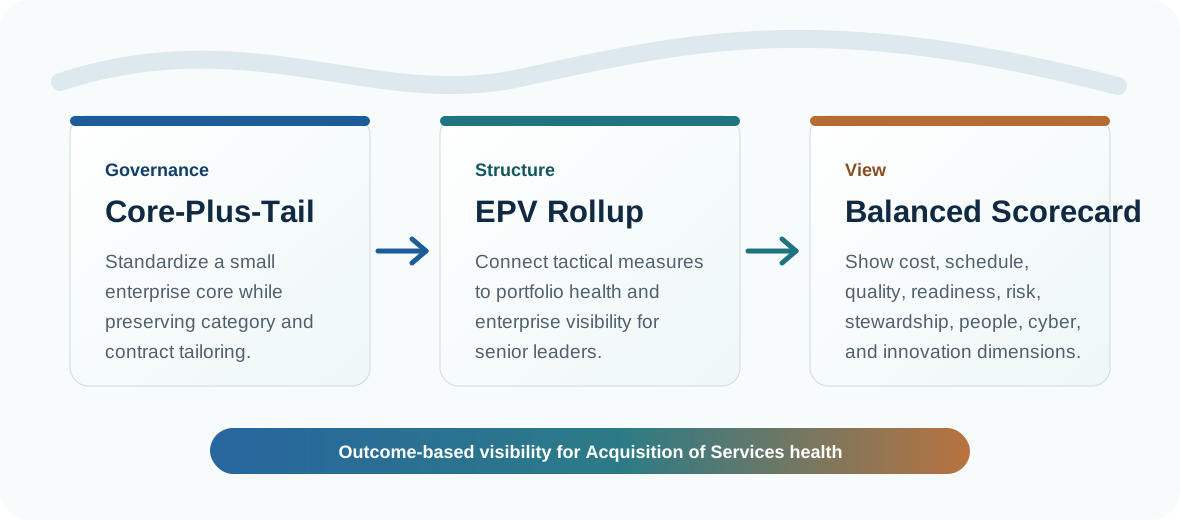
A governance model that standardizes a small enterprise-level core while preserving room for service-category tailoring and local contract diagnostics.
A three-tier rollup structure connecting tactical contract measures to portfolio and enterprise visibility for senior acquisition leaders.
A scorecard approach that shows service health across cost, schedule, quality, customer satisfaction, compliance, readiness, stewardship, people, cyber, and innovation dimensions.
QASP, CPARS, schedule, cost, and user-value signals identify where management action is needed.
Category-tailored measures compare like services without forcing every contract into the same narrow dashboard.
Senior leaders get consistent visibility into readiness contribution, risk, customer value, and stewardship.
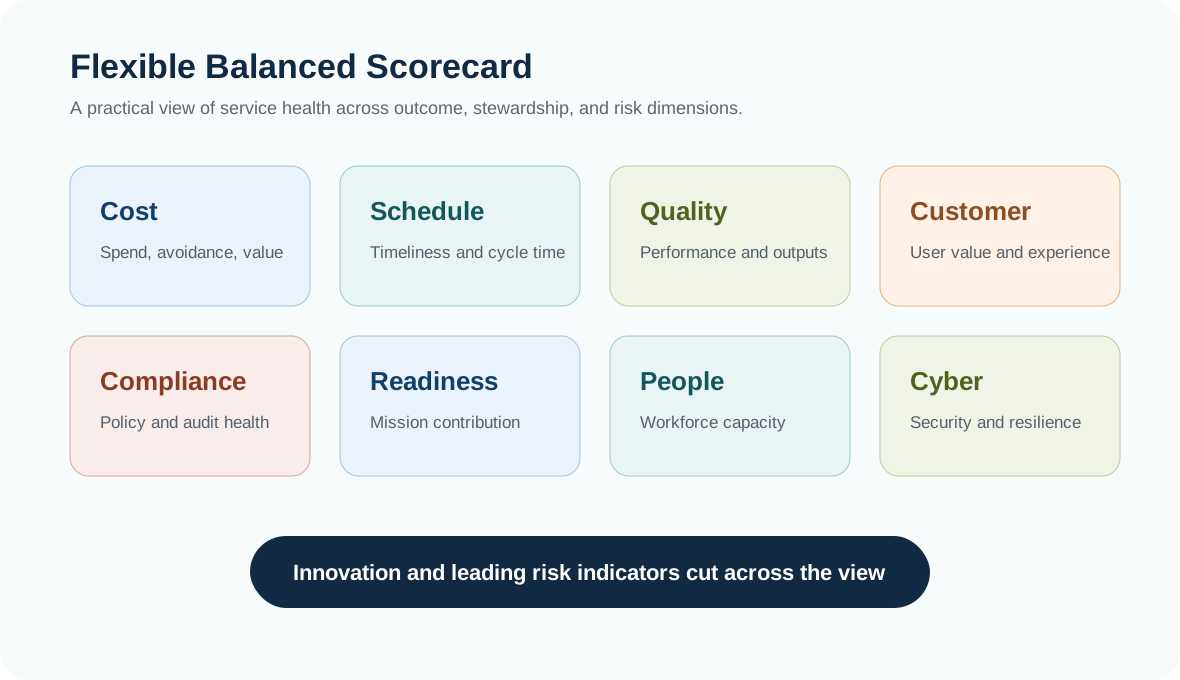
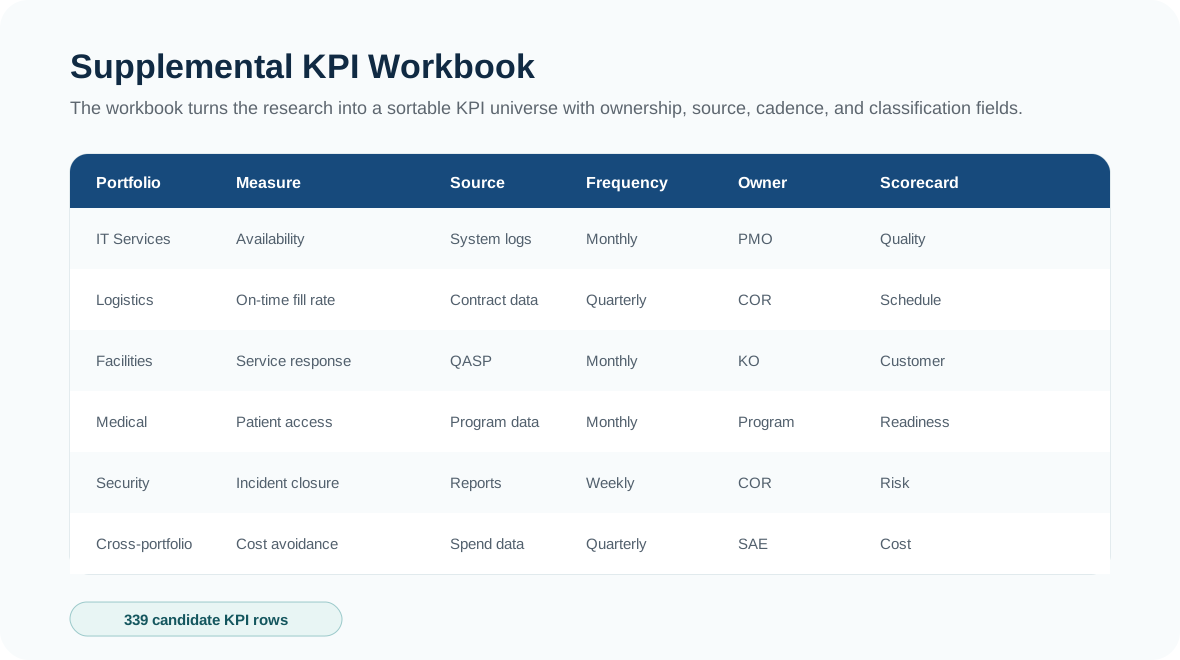
The final abstract identifies seven foundational metrics grouped across cost, schedule, quality, customer satisfaction, and compliance. The supplemental workbook expands that core into a larger KPI universe that can support enterprise reporting, service-category tailoring, and contract-level diagnosis.
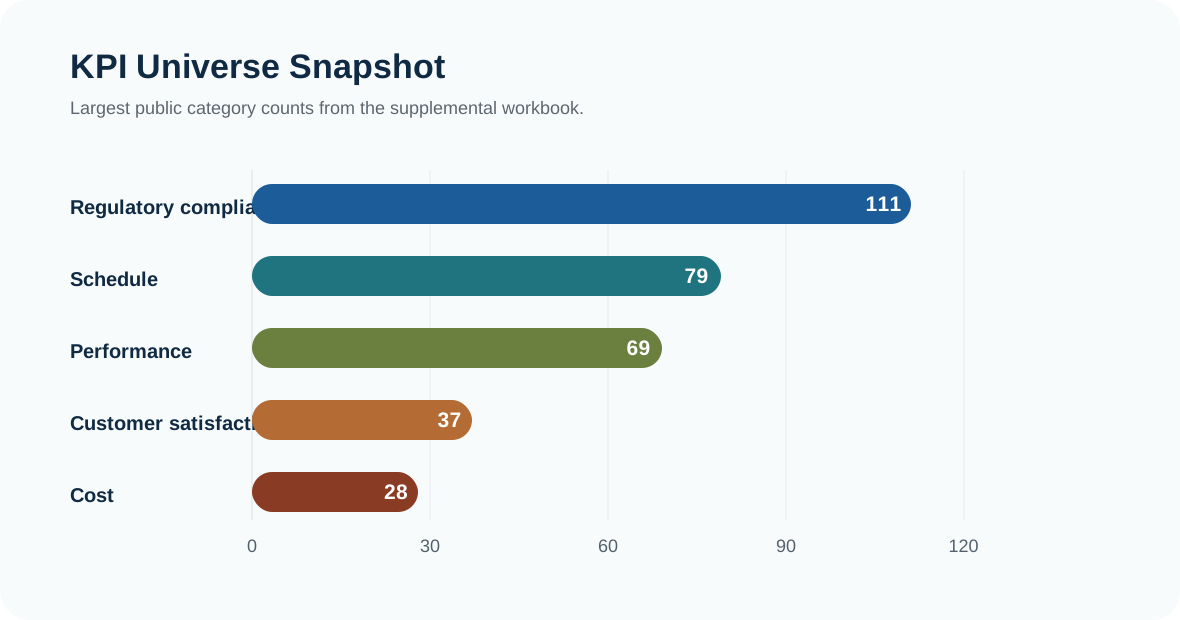
Stakeholders reframed service health as measurable contribution to operational readiness, not simply completion of administrative activity.
DoD has useful process measures, but the Services Pathway still needs a more consistent way to connect contract performance to mission outcomes, user value, and portfolio-level decisions.
A tiered framework can support both standardization and flexibility: common enterprise metrics for rollup, tailored category metrics for relevance, and contract-level diagnostics for management action.
Data governance matters as much as metric selection. Each KPI needs a source, owner, cadence, target, and decision use so measurement does not become another compliance exercise.
Use a bounded pilot to test enterprise, portfolio, and contract-level reporting before scaling across the Services Pathway.
Update DoDI 5000.74 or related guidance to require the core metric set while allowing Core-Plus-Tail tailoring by service category.
Connect structure, process, and outcome data in the acquisition data infrastructure so reporting is repeatable and less manually intensive.
Train acquisition teams on pre-award metric discipline, including how to define outcomes, establish targets, connect QASP surveillance, and avoid gaming or metric overload.
The project turns a broad problem into an implementable performance-management architecture. Its value is not just a list of KPIs, but a way to govern, structure, and visualize service-acquisition health so DoD leaders can compare performance, identify risks earlier, and make better decisions about contracted services.