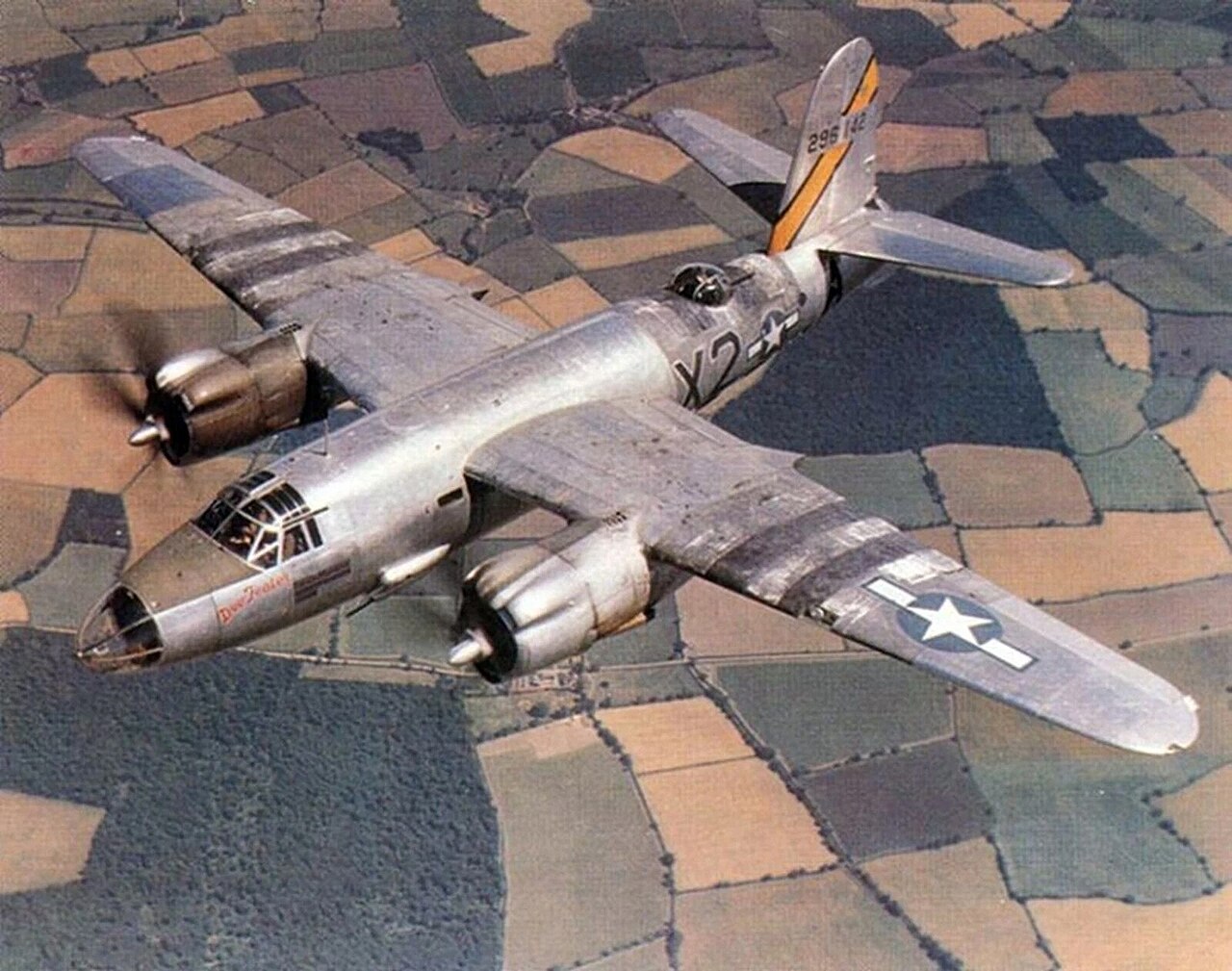
The Bob Cary WWII Research project has a new B-26 expansion built from a user-provided documentary transcript. The transcript helped sharpen the aircraft side of the project: not Bob Cary's personal record, but the world of the machine his unit flew.
A stronger B-26 page
The B-26 Marauder page now goes beyond specifications and basic history. It adds the aircraft's acquisition story, early safety crisis, training demands, Doolittle-era recovery, medium-altitude tactics, Norden bomb-run sequence, and combat reputation.
The most useful thread is the aircraft's transformation. The B-26 began as an urgent prewar acquisition answer: fast, modern, heavily armed, and needed immediately. That urgency helped get it into production quickly, but the lack of a prototype-test cushion, later weight growth, inexperienced crews, and immature support systems made early fielding dangerous.
Two new stories
I added From Widowmaker to Workhorse, a case-study style story written for readers who understand acquisition risk. It frames the B-26 around urgency, concurrency, requirements growth, training, sustainment, oversight, and operational adaptation.
I also added Fly It or It Will Fly You, a first-person composite story about a B-26 target run. It is clearly labeled as a composite, not Bob Cary's diary or invented memory. The goal is to help readers feel the sequence: takeoff, formation, initial point, Norden sight, flak, bombs away, breakaway, and return.
Evidence boundaries stay visible
The transcript is being treated as a secondary context source. It helps explain the aircraft and crew environment, but it does not prove Bob's individual aircraft, ship number, Lady Bugs lead, or whether ship 82 dropped on Singen or Thayngen.
That boundary matters. The Bob Cary project works best when general context, family memory, and confirmed records stay in their own lanes. This update adds a richer B-26 lane without blurring the open questions at the center of the research.