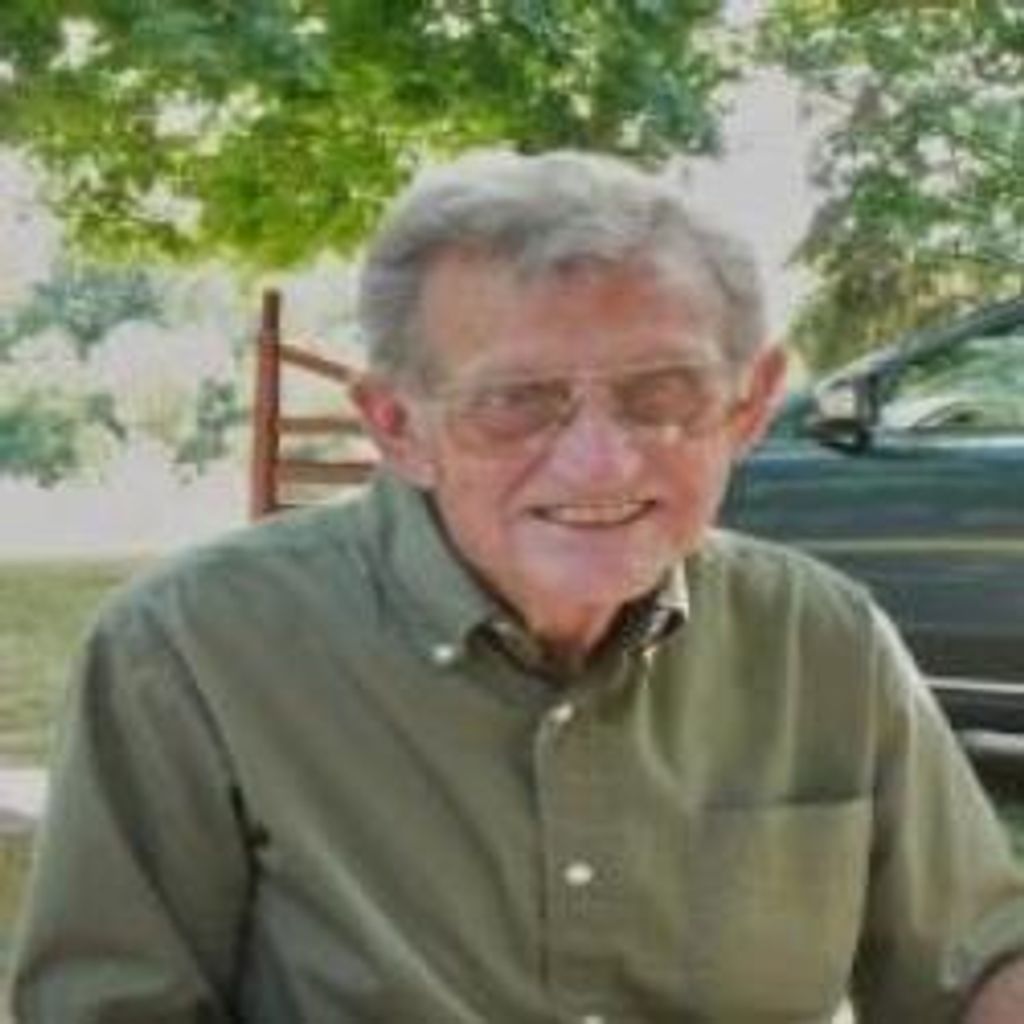
The updated evidence changes the shape of John’s Iwo Jima story. His documented experience was probably not the entire thirty-six-day battle. It was an extraordinarily intense first eight days, ending in evacuation for combat fatigue on February 26–27. He likely missed Hill 362B and the final northern fighting while receiving treatment.
The best current retelling
Ronald Marvin “Johnnie” Haynes was born in Grand Rapids on December 15, 1925, and grew up on farms around Hastings, Michigan. He graduated from Hastings High School in 1943. On December 14, 1943, one day before his eighteenth birthday, he enlisted in the Marine Corps at Detroit.
He went west to San Diego for recruit training. By February 27, 1944, he was with Platoon 77 at the rifle range. Writing home, he described cold nights, rain, distant snow-covered mountains, rifle instruction, hard training, mediocre food, and already feeling as though he had been away for years. He joked that the constant gunfire might leave him “shell shocked,” a phrase that would acquire a much darker meaning one year later.
His surviving discharge information says he qualified with the bayonet and Browning light machine gun, earned a marksman badge, and became a qualified combat swimmer and light-machine-gun crewman. That supports the family account that he served as a machine gunner and ammunition carrier. The exact weapon and assignment are still unknown, but his work likely involved operating a gun, carrying ammunition, supporting a gun team, or shifting between those duties as casualties and battlefield needs required.
Training for Island X
After recruit training, he apparently joined the newly organized 5th Marine Division at Camp Pendleton. His regiment was the 26th Marines. The best present company assignment is Company G, 3rd Battalion, 26th Marines, although a muster roll is still needed to make that final.
John departed the United States on July 22, 1944, the same date the 26th Marines sailed from San Diego. The regiment was being rushed west as a possible reserve for the Guam operation. Before it was committed, however, the situation on Guam improved and the regiment was diverted to Hawaii. This explains why the family remembered Guam while the unit history does not show the 26th Marines fighting there. He may have remembered being sent toward Guam, but we still cannot prove he landed or fought on the island.
In Hawaii, he likely trained at Camp Tarawa in the cold, dusty ranch country above Hilo. The Marines practiced attacks against a simulated target called “Island X.” They rehearsed amphibious landings, weapons employment, combat loading, coordination with tanks and artillery, and the destruction of fortified positions. Final rehearsals took place around Maui and Kahoolawe before the force moved through Eniwetok and Saipan toward Iwo Jima.
Landing at Iwo Jima
On February 19, 1945, John arrived off Iwo Jima with one of the largest naval forces yet assembled in the Pacific. The first assault waves landed at 9:05 a.m. The 26th Marines, initially held in reserve, spent much of the day waiting offshore. Its battalions began landing after 3:00 p.m. and completed the movement by 5:32 p.m., assembling near the southern end of Airfield No. 1. Even this reserve landing meant crossing congested beaches under artillery and mortar fire, struggling through loose volcanic ash, and trying to organize before darkness. The official Marine Corps monograph describes the 26th Marines’ D-Day landing.
For the next two days, John’s battalion was probably close behind the assault units, moving supplies, preparing weapons, digging positions, and living under shellfire. There was no reliably safe rear area. Ammunition, water, and equipment all had to be carried through ash that swallowed boots and exhausted men.
February 22: command torn apart
His likely sustained frontline experience began before dawn on February 22. The 26th Marines relieved the 27th Marines in a cold, miserable downpour while under extremely heavy fire. The three battalions went into line abreast, with 3/26 on the right. The relief became confused, and 3/26 extended too far into the neighboring division’s sector. Japanese positions on a commanding bluff poured flanking fire into the battalion.
At about 9:40 that morning, the battalion commander, Lieutenant Colonel Tom M. Trotti, and his operations officer were killed. The executive officer had already been wounded. Captain Richard M. Cook, commander of Company G, briefly assumed command before another officer arrived. If John was indeed in Company G, this command collapse occurred directly above him. The battalion made only minor gains and suffered numerous casualties. The Marine Corps account describes the rain, exposed flank, and deaths in 3/26’s command group.
On February 23, the 26th Marines remained pinned by fire from the right and made little progress. South of them, the 28th Marines raised the two flags on Mount Suribachi. Family memory says John saw both. That remains possible, but unproved. He was not one of the flag raisers and probably did not assault the mountain itself. His part of the battle was already moving north toward the airfields and the Japanese defensive ridges.
February 24: exposed and far forward
February 24 may have been one of his worst days. After an enormous artillery, naval-gunfire, and air preparation, 2/26 and 3/26 attacked abreast. Third Battalion advanced so far that its right flank was again exposed. Japanese soldiers in caves and pillboxes above the Marines fired into them and threw grenades down the bluff. Stretcher bearers were hit trying to evacuate casualties.
Company G remained dangerously far forward. It was not until about 10:00 that night that the company could disengage and withdraw under protective artillery fire, bringing back many wounded. If the Company G evidence is correct, this is the most specific description yet found of what John personally may have endured immediately before his collapse.
The following day, February 25, the 26th Marines largely held its ground while the neighboring division attempted to catch up. It was not a day of rest. Japanese fire continued from the right front and made both ammunition supply and casualty evacuation difficult. For a machine-gun crewman or ammunition carrier, that meant continuing to move heavy ammunition through exposed terrain while exhausted and under fire.
February 26: combat fatigue
At 8:00 a.m. on February 26, the 26th Marines attacked again after forty-five minutes of artillery and naval gunfire. Third Battalion advanced on the right with tanks firing overhead. Rain and low clouds eventually interfered with the tank support. The battalion gained only about one hundred yards while attacking fortifications and enemy guns hidden in ravines. Across the regimental front, Marines faced rifles, machine guns, mortars, artillery, and close grenade fighting. The official account details 3/26’s February 26 assault.
That is the day John’s record says Combat Fatigue 26Feb45. His casualty card uses the contemporary classification SS(CF), meaning shell shock or combat fatigue. The front of the card is dated February 27.
We do not yet know his exact symptoms. Combat fatigue could involve uncontrollable shaking, profound exhaustion, panic, confusion, sleeplessness, emotional collapse, or an inability to continue functioning. It was a recognized combat casualty caused by cumulative exposure, not a failure of courage. By the end of February 24, before John’s own recorded collapse, the Marine Corps had already counted 558 combat-fatigue casualties on Iwo Jima.
John was only nineteen. He had spent days under artillery, mortar, and machine-gun fire; seen his battalion command torn apart; experienced night infiltration threats; carried weapons or ammunition over punishing ground; and taken part in attacks in which progress was measured in yards. His casualty may not have resulted from one identifiable explosion. It may have been the cumulative point at which his mind and body could no longer remain in the line.
Evacuation aboard USS Logan
The dated evidence strongly suggests that John was taken from Iwo Jima aboard USS Logan. The ship received casualties from the beaches throughout February 19–28 and departed Iwo Jima on February 28 with 200 wounded patients in sick bay. After a brief stop at Saipan, it reached Guam on March 4 and disembarked the casualties. John’s casualty card identifies a report from USS Logan and records his transfer to a base or shore hospital in the Marianas. A patient roster or medical-transfer record would make the identification conclusive, but the most likely reconstruction is that Logan carried him from Iwo Jima to Guam. The Naval History and Heritage Command history of USS Logan documents the ship’s casualty-evacuation route.
His prognosis was listed as favorable. He returned to duty status on March 31, five days after organized resistance on Iwo Jima had ended.
This means he was almost certainly not present for the 26th Marines’ March fighting around Hills 362A and 362B or the battle’s final northern phase. The older version of his story placed him there because those were famous 26th Marines actions. The dated medical evidence now points elsewhere: his Iwo Jima was the landing, the airfield approaches, the exposed bluffs, and the attacks of February 22–26.
Back to duty
On April 6, he wrote home:
“Back to duty again—a little nervous but that’s to be expected I guess.”
He said he expected to go to a rest camp before rejoining his old outfit. He no longer cared for guns, doubted he would hunt after the war, missed Michigan’s lakes and summer, and wished he could speak to his parents for an hour. He also wrote, “I’ve got one wound.”
John evidently understood what happened to him as a wound. The Marine Corps made a narrower administrative judgment. Its later review found combat fatigue and a July 1945 diagnosis of “Psychoneurosis, Anxiety,” but no documented enemy-caused physical wound meeting the Purple Heart rules. It therefore determined that he was not eligible for the Purple Heart.
Official recognition
That finding does not erase his casualty. Headquarters Marine Corps simultaneously verified his Combat Action Ribbon for active participation in ground combat, providing the clearest official confirmation yet that he personally fought. It also verified the Presidential Unit Citation for the Iwo Jima assault, the Asiatic-Pacific Campaign Medal with one bronze campaign star, and the World War II Victory Medal.
He returned to the United States on June 27, 1945. The July medical survey shows that anxiety symptoms remained significant enough for formal evaluation. A faint casualty-card notation says “Discharge Ordered: 24Aug45,” and he was discharged at Great Lakes, Illinois, on August 31, 1945. By then he had advanced from private and PFC to corporal.
He returned to Hastings, married Clara Zimmerman in 1950, raised four children, and built a life in sales and through Haynes Supply Company. He hunted less, but continued fishing, golfing, boating, music, and family life. The war did not end his story, but his April letter suggests that it permanently altered his relationship with guns, safety, home, and ordinary peace.
What the evidence supports today
The most accurate conclusion today is that John Haynes was a nineteen-year-old machine-gun-qualified Marine who fought through the opening week of Iwo Jima with the 26th Marines, probably Company G, 3rd Battalion. His unit’s combat immediately before his casualty included exposed advances, close defensive fighting, heavy casualties, and a nighttime withdrawal under artillery protection. He survived, was evacuated for a genuine combat-stress casualty, returned to duty after the battle, and came home carrying effects that the medical language of 1945 called combat fatigue, psychoneurosis, and anxiety.
Sources and research status
This reconstruction combines John’s surviving family letters and discharge information; the July 2026 Headquarters Marine Corps casualty-card release and awards determination; the official Marine Corps campaign monograph linked above; the official USS Logan history; and local records supplied by Hastings Public Library. His exact company still awaits muster-roll confirmation, and the family memories of Guam and the two flag raisings remain unproved. The Ronald Haynes Iwo Jima research project preserves the broader evidence trail and open questions.