AIR BASE AIR DEFENSE / DAILY BRIEFING

ABAD Daily NewsAcquisition, military and joint-force developments.

29SEP 202609 STORIES

Nine distinct reports on air-base defense, counter-drone testing, missile capacity, naval air defense, allied industrial cooperation, resilient command and control and military robotics, checked against every earlier edition and separated from older event, award and exercise dates.

· Europe/BerlinCoverage: 22 September 2026–29 September 2026Edition permalink ↗

Acquisition · Military · Joint force

BLUF = bottom line up front
01
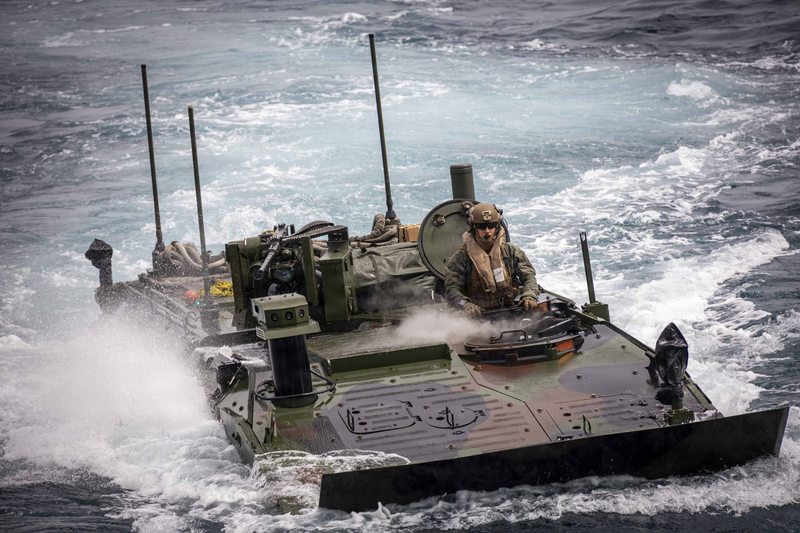
A Marine Corps Amphibious Combat Vehicle operates in the water during qualifications off California.
Marines conduct Amphibious Combat Vehicle qualifications off California on June 24, 2026; official platform context for the Pulsar-L award. U.S. Marine Corps / Sgt. Mary R. Jenni, via DefenseScoop

Marines award $15.7 million to put Pulsar-L jammers on ACVs

BLUF The Marine Corps awarded Anduril $15.7 million to integrate Pulsar-L sensor-jammers on Amphibious Combat Vehicles, citing an urgent need for a system that fits the vehicle's space, weight and power limits. Deliveries are planned to start in January 2027. The public notice does not disclose quantity, test schedule, acceptance criteria or fleetwide fielding scope.

DefenseScoop / System for Award Management · Original reporting traced to an official award notice

Award made earlier in September; DefenseScoop report published September 28, 2026; first deliveries planned for January 2027

Read the source

02
Kaja Kallas speaks at a Council of the European Union press conference in Brussels.
Kaja Kallas at the September 28 Foreign Affairs Council press conference after the meeting that approved the five defense projects. Council of the European Union

EU clears five joint defense projects spanning counter-drone and IAMD

BLUF The EU approved five collaborative industrial projects, including DECODER for scaling drones and counter-drone technology and EU-FIAMD for federated air and missile defense, early warning and coordinated command. The projects are now eligible for initial EDIP funding and possible later Competitiveness Fund support. Approval is not a disclosed contract award, deployment schedule or readiness declaration.

Council of the European Union · Official multinational decision

Council approval announced September 28, 2026 at 10:55 without a stated time zone

Read the source
03
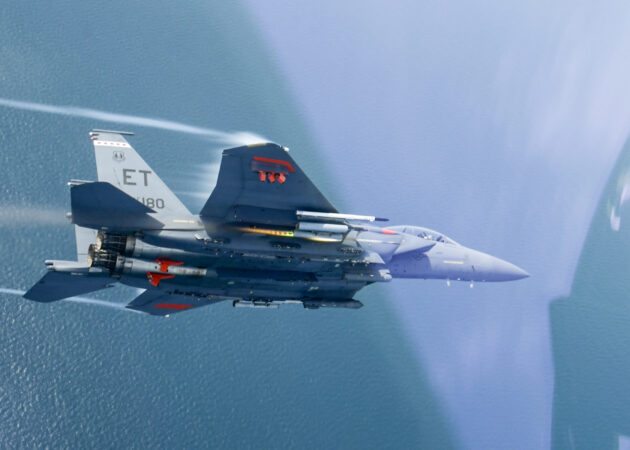
An F-15E Strike Eagle in flight during an APKWS integration test.
A 96th Test Wing F-15E during a May 22, 2025 APKWS test at Eglin Air Force Base; archival system context for the new fuze award. U.S. Air Force / Staff Sgt. Thomas Barley, via Air & Space Forces Magazine

Navy adds $52.3 million in proximity fuzes to upgrade APKWS

BLUF A $52.32 million Navy modification funds proximity fuzes for APKWS upgrades through November 2027, adding an industrial step behind the rocket's expanding counter-drone role. The full amount is obligated from Defense-wide operations, prior-year operations and Army ammunition accounts. The notice does not disclose fuze quantity, intended platforms, delivery cadence or a new operational qualification result.

U.S. Department of War · Official contract notice

Contract modification announced September 28, 2026; work scheduled through November 2027

Read the source
04
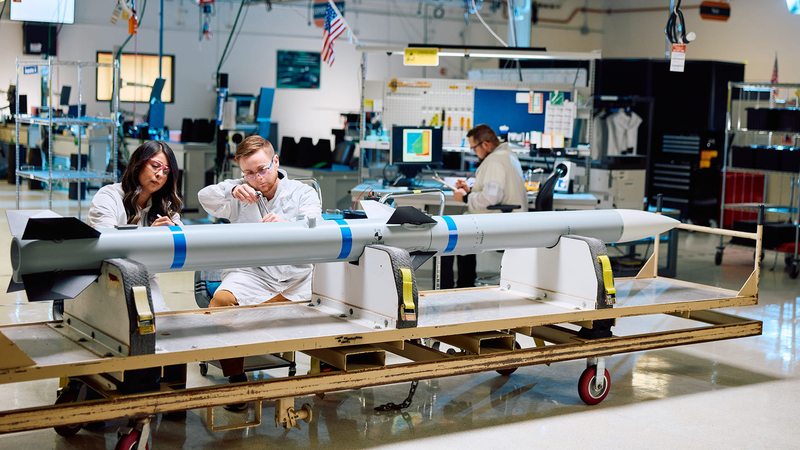
Two technicians work on an AMRAAM missile in a production facility.
Two technicians work on an AMRAAM in the manufacturer photograph published with the September 28 contract announcement. RTX / Raytheon

Raytheon gets a $20.7 billion ceiling to ramp AMRAAM production

BLUF A five-year AMRAAM multi-year contract with two option years carries a not-to-exceed value of $20.699 billion and is intended to support annual production of at least 1,900 missiles. The award covers U.S. and 16 foreign customers through June 2033. Only about $154.35 million was obligated at award, so the ceiling is not current spending or delivered inventory.

RTX / U.S. Department of War · Manufacturer announcement traced to an official contract notice

Contract awarded September 25 and announced by the government and manufacturer September 28, 2026

Read the source
05
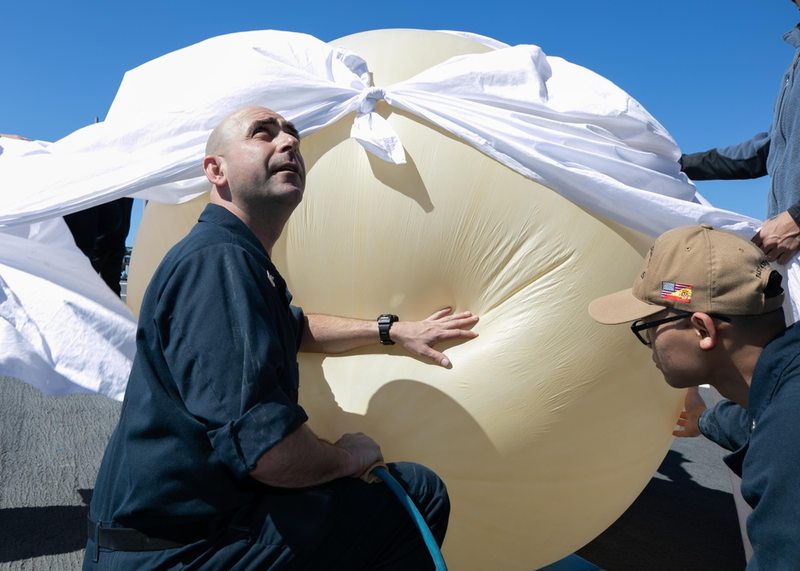
A sailor fills a helium sphere for an AN/SPY-1A radar calibration aboard USS Arleigh Burke.
A sailor prepares an AN/SPY-1A external-calibration sphere aboard USS Arleigh Burke in 2023; archival Aegis context for the processor refresh. U.S. Navy / Mass Communication Specialist 2nd Class Almagissel Schuring

Navy funds a $72.2 million Aegis processing refresh for destroyers

BLUF NAVSEA's $72.22 million action refreshes the Aegis Linear Processing System on guided-missile destroyers, with $36.11 million obligated now and work extending to March 2030. The notice identifies a processor-technology effort rather than new ships, radar arrays or interceptors. It supplies no performance gain, hull count, installation schedule or operational-availability claim.

U.S. Department of War · Official contract notice

Contract action announced September 28, 2026; work scheduled through March 2030

Read the source
06
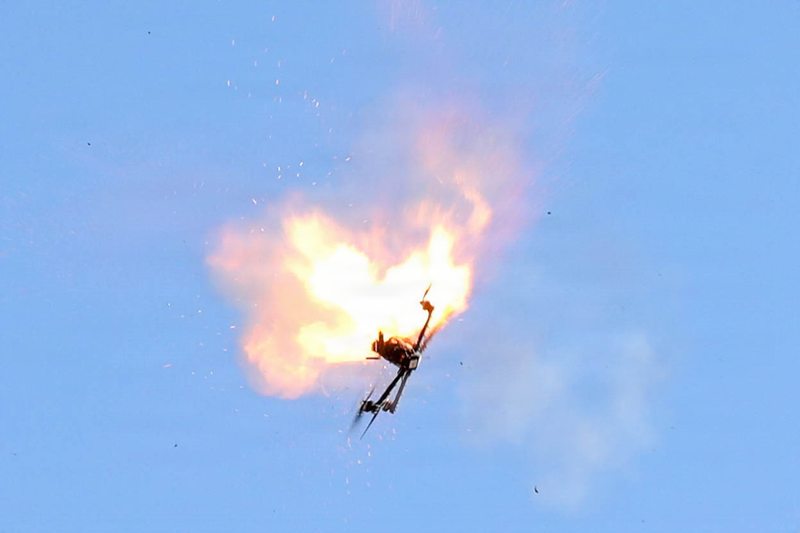
A small drone breaks apart in a bright mid-air explosion during Falcon Peak.
A drone shot down during Falcon Peak at Yuma Proving Ground on September 22, 2026; official context for the exercise that established the enduring lanes. U.S. Department of Defense / Staff Sgt. Colten Tessness, via DefenseScoop

Falcon Peak leaves Yuma with permanent counter-drone test lanes

BLUF Falcon Peak 26.2 has moved from a periodic demonstration to persistent test infrastructure: Yuma's new counter-drone lanes will remain open for vendors and defense partners, while standardized performance data feeds JIATF-401's acquisition repository. This is a substantive result beyond the prior urban-test plan and Lattice integration reports; the government did not publish system rankings or purchase decisions.

What changed: Falcon Peak 26.2 has now concluded and produced enduring Yuma test lanes plus a standardized acquisition-data pipeline; no public rankings or awards were released. Previous coverage

Headquarters Department of the Army / DVIDS · Official exercise result

Falcon Peak 26.2 concluded before the September 27 report; DVIDS posted the report at 12:47 without a stated time zone

Read the source
07
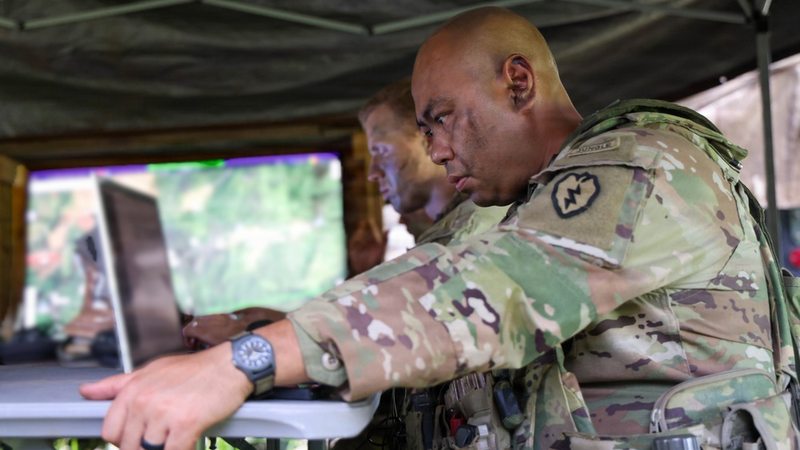
Two U.S. Army soldiers operate laptops inside a tactical field command post in Hawaii.
Maj. Nathan Sitterley manages operations with advanced C2 software during Nakoa Fleek at Schofield Barracks in September 2026. U.S. Army / Spc. Justin Hicks

25th Infantry Division validates cloud-to-edge C2 under field friction

BLUF Lightning Surge 5 pushed a cloud-to-edge common operating picture, new communications gear, sensors and command nodes through jungle field conditions where latency, power and connectivity competed with the opposing force. The September 23 air assault tested synchronization, and Soldier feedback is shaping Lightning Surge 6 at JPMRC 27-01. The report documents validation work, not Army-wide fielding.

U.S. Army · Official exercise result

Lightning Surge 5 phases ran September 14–25; culminating air assault occurred September 23, 2026

Read the source
08
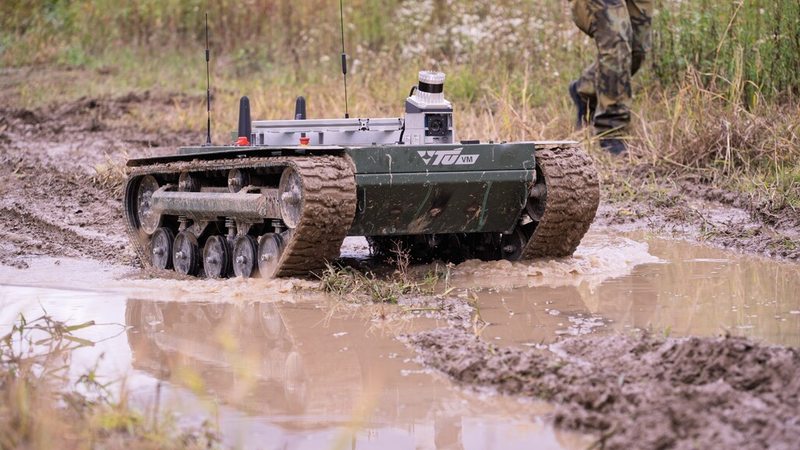
Several unmanned ground vehicles line up on a Czech Army test range during Drone Shield 2026.
Ground robots at the Drone Shield 2026 UGV program in Lipník nad Bečvou during the September 22–24 test period. Army of the Czech Republic / Capt. Jan Králiček

Drone Shield tests more than 30 ground robots against repeatable Army tasks

BLUF Czech Drone Shield moved more than 30 ground robots from display stands onto a repeatable TEVV range, where soldiers and specialists assessed mobility, obstacle handling and selected autonomous functions against future user tasks. The exercise is building a data and requirements base for reconnaissance, logistics and hazardous work; it did not select a winner or authorize a purchase.

Army of the Czech Republic · Official allied experimentation report

Three-day UGV program conducted September 22–24, 2026 at the NATEP UGV range in Lipník nad Bečvou

Read the source
09
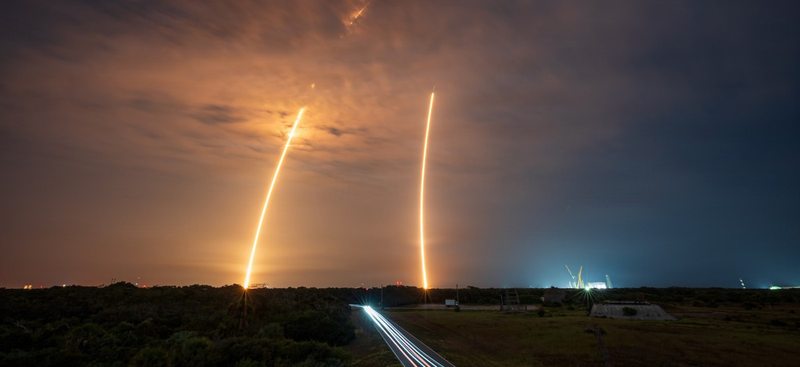
Bright rocket trails cross the night sky above the Cape Canaveral launch complex.
Falcon 9 launch at Cape Canaveral Space Force Station on July 30, 2026; archival installation context for the planned counter-drone additions. U.S. Space Force / Gwendolyn Kurzen, via Defense One

Cape Canaveral identifies Lattice and a laser as its next counter-drone layer

BLUF Cape Canaveral's commander now identifies Lattice as the planned sensor-and-command layer and says an AFRL-tested laser system will provide a kinetic option without the spacecraft risks of broad RF jamming. This materially advances the earlier reinforcement plan, but the laser model, value, quantity and fielding date remain undisclosed; neither addition is reported operational yet.

What changed: The installation commander has now named Lattice and an AFRL-tested directed-energy system as the planned layers; the earlier report did not identify either capability. Previous coverage

Florida Today / Space Launch Delta 45 · Original local reporting and installation-commander interview

Commander interview published September 22, 2026; installation schedule and exact fielding date were not disclosed

Read the source